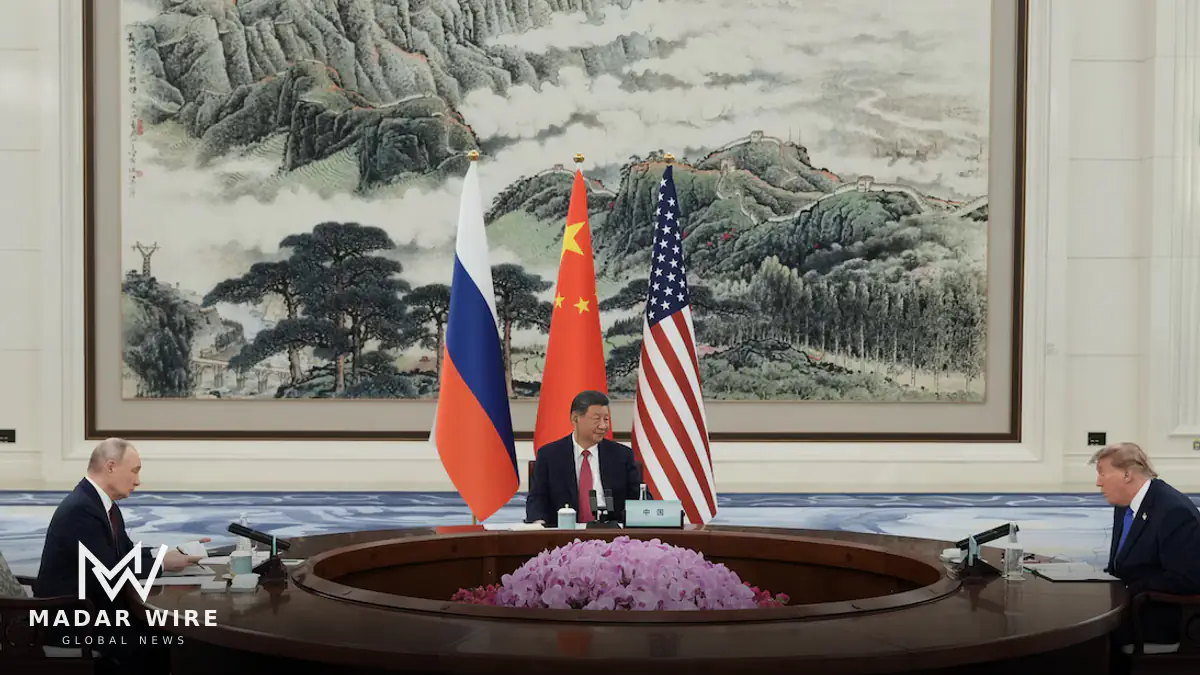
Leaders of China, the United States and Russia gathered in Geneva this week for a series of talks described by officials as the most significant trilateral engagement in decades.
The three‑nation summit, convened at the United Nations Office, marked the first face‑to‑face dialogue since the 2019 meeting in Moscow, according to Associated Press US - Google. Diplomats said the agenda covered nuclear arms control, cyber security and regional conflicts in the Middle East and Eastern Europe.
U.S. Secretary of State Antony Blinken, Chinese Foreign Minister Wang Yi and Russian Foreign Minister Sergey Lavrov each delivered opening statements that emphasized a shared interest in preventing escalation and fostering economic stability.
While no formal treaty was signed, the participants issued a joint communiqué calling for “enhanced strategic communication” and a “renewed commitment to multilateral frameworks.” The statement also pledged to resume negotiations on the New START treaty within the next six months.
Diplomacy in Focus
Analysts view the talks as a test of the emerging “great‑power triangle” that could reshape global governance. The United States seeks to balance China’s growing influence in Asia with Russia’s assertiveness in Europe, while both Beijing and Moscow aim to mitigate U.S. pressure on sanctions and trade policies.
Congressional leaders in Washington have welcomed the dialogue but warned that any concessions must be matched by concrete actions on human rights and election interference, a point highlighted by Associated Press US - Google reports.
Specific points of contention included the future of the Iran nuclear deal and the ongoing conflict in Ukraine. Both China and Russia urged a diplomatic solution, while the United States pressed for stricter enforcement of existing sanctions.
Visual Symbol of Cooperation
A single photograph taken on the conference’s final day has become emblematic of the meeting’s tone. The image shows Blinken, Wang and Lavrov standing side by side, arms lightly resting on each other’s shoulders, against a backdrop of the United Nations flag.
Photojournalists noted that the composition, lighting and body language convey a rare moment of camaraderie among rivals. The picture has been widely circulated on social media and cited in diplomatic briefings as a visual reminder that dialogue remains possible even amid geopolitical tension.
Critics argue that a photo cannot mask underlying strategic rivalries, noting that each nation continues to modernize its military capabilities. Nevertheless, the image has been praised by think‑tank experts as a “soft power” tool that could lower the risk of miscalculation.
Observers say the image will likely be used in future diplomatic outreach, reinforcing the narrative that the three powers can cooperate when mutual interests align.