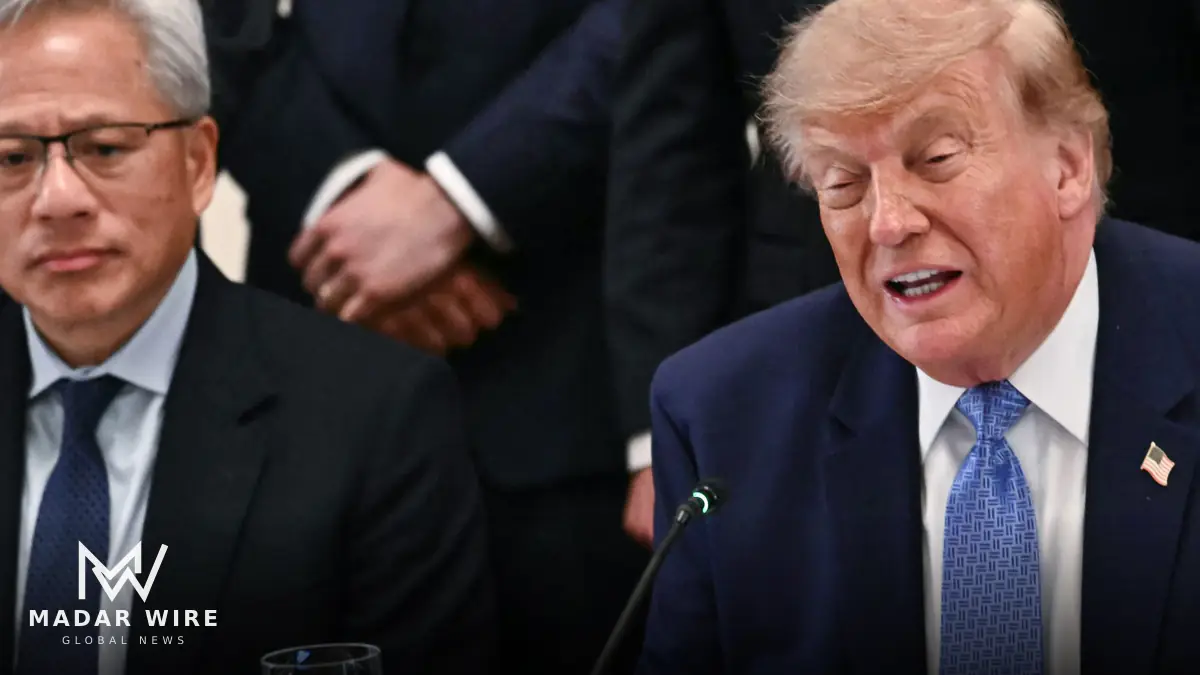
President-elect Donald Trump’s recent public support for Nvidia CEO Jensen Huang marks a notable departure from the aggressive stance held by his administration’s China hawks. According to reporting from US Politics & White House, the move suggests a strategic recalibration of how the incoming administration intends to handle the intersection of national security and the semiconductor industry.
For years, hardliners within the Republican party have pushed for stringent export controls on high-end chips to prevent China from gaining a military or technological edge. By aligning himself with Huang, Trump appears to be prioritizing the global market position of U.S. tech leaders over the blanket containment strategies favored by some of his advisors.
A Shift in Trade Strategy
The tech industry has long argued that overly restrictive export policies inadvertently harm domestic innovation and cede market share to foreign competitors. Nvidia, which has become the world’s most valuable company due to the AI boom, remains heavily reliant on global supply chains that include the Chinese market. Trump’s rhetoric implies a preference for deal-making and economic growth, potentially signaling a more flexible approach to trade negotiations.
This pivot creates friction within the GOP, where the consensus on China has largely been defined by a 'decoupling' narrative. While the incoming administration has not formally abandoned its hawkish rhetoric, the endorsement of a titan like Huang suggests that economic pragmatism may play a larger role in future policy decisions than previously anticipated.
Implications for Silicon Valley
Industry observers are closely watching how this dynamic will influence future executive orders and trade enforcement. If the administration continues to favor individual corporate success stories, it could lead to a more targeted, rather than systemic, application of export bans. This would be a significant relief for Silicon Valley firms that have struggled to navigate the complex regulatory environment established during the previous term.
Ultimately, the alignment between Trump and Huang underscores the immense political capital held by the AI sector. Whether this support translates into a permanent shift in policy remains to be seen, but it clearly indicates that the incoming White House is willing to challenge its own ideological base to protect the interests of American tech giants.