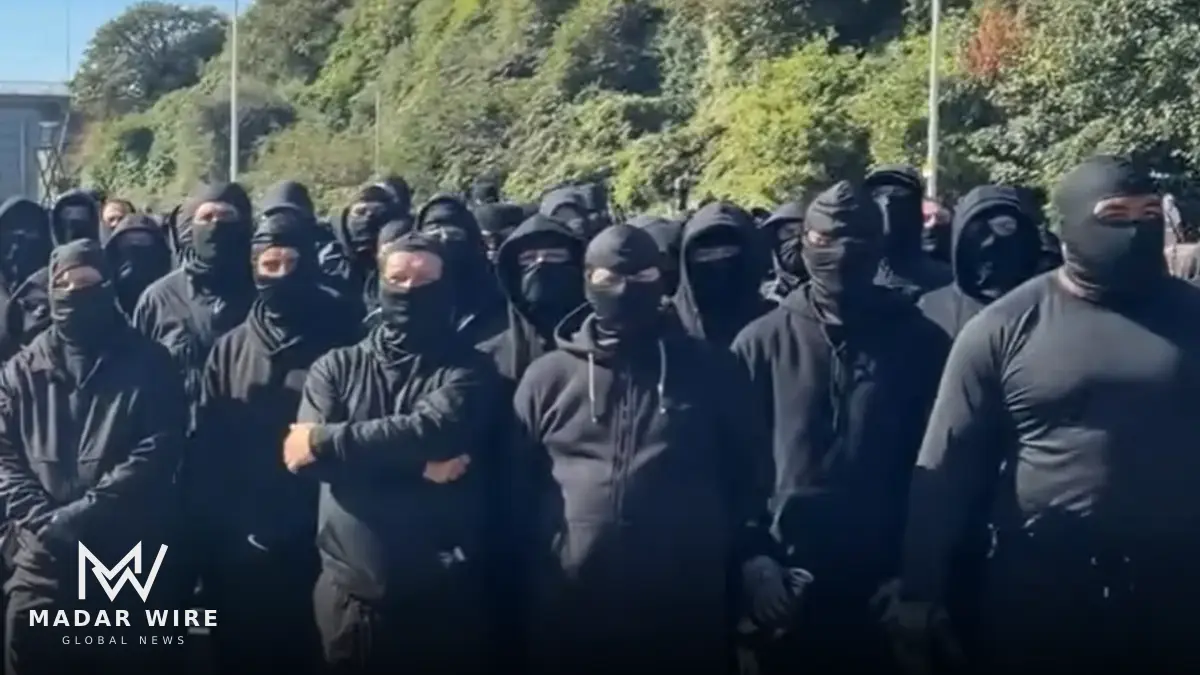
Security experts have issued a stark warning regarding the proliferation of unregulated vigilante groups operating as de facto security details for far-right figures across the UK. These individuals, often clad in black uniforms and tactical body armour, have become a visible presence at recent public events and demonstrations.
According to reporting by The Guardian, the rise of these self-styled security teams has prompted concerns among law enforcement and civil liberty monitors. The groups are described as adopting a confrontational posture, which analysts fear could lead to an escalation of violence during politically charged gatherings.
Lack of regulatory oversight
The primary concern cited by security professionals is the absence of formal vetting and licensing for these individuals. Unlike professional security personnel, who must adhere to strict standards set by the Security Industry Authority (SIA), these vigilantes operate in a legal grey area. Their presence creates a volatile environment where the boundary between legitimate protection and intimidation becomes increasingly blurred.
Observers noted that these figures are frequently seen accompanying high-profile activists, such as Tommy Robinson. The tactical appearance of these entourages is seen as a deliberate attempt to project authority and deter opposition, yet it lacks the professional training and accountability required of licensed security providers.
Public order and safety implications
The emergence of these groups poses a significant challenge for police forces tasked with maintaining public order. When private actors intervene in demonstrations or public confrontations, the potential for unintended escalation increases significantly. Experts warn that the adoption of paramilitary-style aesthetics by political movements is a concerning development that threatens to undermine public trust in safety protocols.
While the individuals involved often frame their presence as necessary for the protection of their clients, the lack of transparency surrounding their recruitment and operational mandates remains a point of contention. As these groups continue to integrate themselves into the far-right movement, the pressure on the Home Office to clarify the legal status of such private security arrangements is expected to mount.