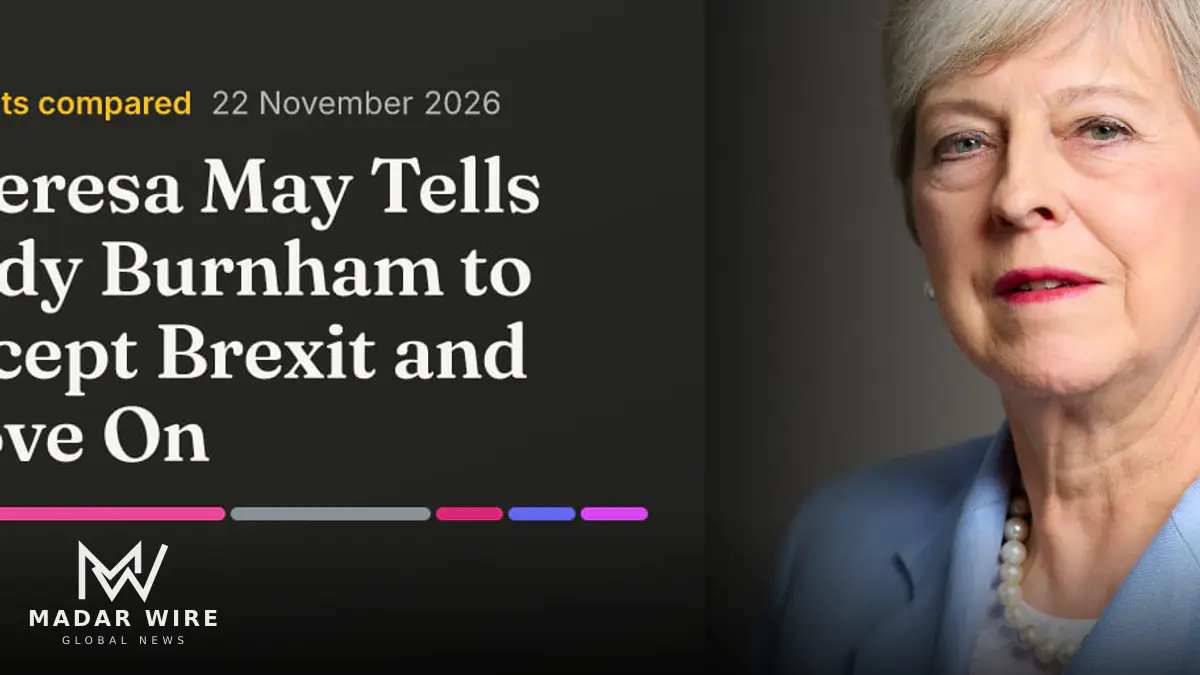
Former Prime Minister Theresa May has urged Labour leader Andy Burnham to accept the finality of Brexit, telling him to "just accept Brexit and move on" during an interview with the BBC.
The remarks, made to Laura Kuenssberg, come following a series of talks between May and European Union officials aimed at smoothing the transition period and addressing remaining friction points in the UK-EU relationship.
Call for political unity
May’s intervention marks a significant moment in the post-election political landscape, where the former leader is attempting to position herself as a unifying figure rather than a partisan adversary. By directing her comments specifically at Burnham, who has been vocal in his criticism of the Conservative government's handling of the transition, May seeks to shift the narrative from blame to forward-looking pragmatism.
According to BBC News - UK, the former PM argued that continued political squabbling over the mechanics of the Withdrawal Agreement serves no purpose to the British public. She emphasized that the legal framework for leaving the EU is settled and that further debate risks undermining the stability of the new trading relationship.
"The deal is done," May stated, reiterating her long-held position that the negotiated agreement provides the best possible outcome for the UK. She suggested that both political parties should focus on the economic opportunities arising from the new era of sovereignty rather than re-litigating the referendum result.
Reaction and context
The exchange highlights the persistent tension between the Conservative leadership's narrative of finality and the opposition's calls for a review of the implementation process. Burnham has previously argued that the current arrangements do not fully reflect the will of voters in regions that voted to remain, particularly in the North of England.
May’s comments are likely to be viewed by Labour critics as an attempt to close the door on further debate. However, supporters of the former Prime Minister argue that her stance reflects a necessary maturity in the political process, urging a focus on economic recovery and domestic policy rather than external disputes.
As the UK navigates the complexities of its new relationship with the EU, such high-profile exchanges between former and current political figures underscore the ongoing challenges of governing in a post-Brexit environment. The BBC notes that May’s recent engagements with EU counterparts have been characterized by a tone of cooperation, aiming to ensure a smooth operational transition despite the political differences at home.
Political analysts suggest that while May’s influence has waned since her departure from Downing Street, her voice still carries significant weight in shaping the discourse around Brexit. Her call for acceptance may resonate with a portion of the electorate weary of the prolonged uncertainty that has characterized the past several years.