Sections
HomeNewsSportsTechEconomy

We use cookies to enhance your browsing experience, analyze site traffic, and personalize content. Privacy Policy

MADAR WIRE
GLOBAL NEWS
HomeNewsSportsTechEconomy
BREAKING
•South Island Alpine Fault band revealed by fibre optic study•Fonterra seeks approval to dump 22 million litres of raw milk•New Zealand couple supplied cannabis to gang member, face naming•Ian Huntley murder claim sparks investigation into UK prison•Mackenzie search underway for missing 72-year-old cyclist•Police seize quarter‑tonne of drugs hidden in onion soup mix•Beau Lamarre-Condon guilty of murdering Sydney couple•Wānaka search for missing tramper Shaun Gilbert ends in tragedy
Home/News

South Island Alpine Fault band revealed by fibre optic study

MadarWire Newsroom•
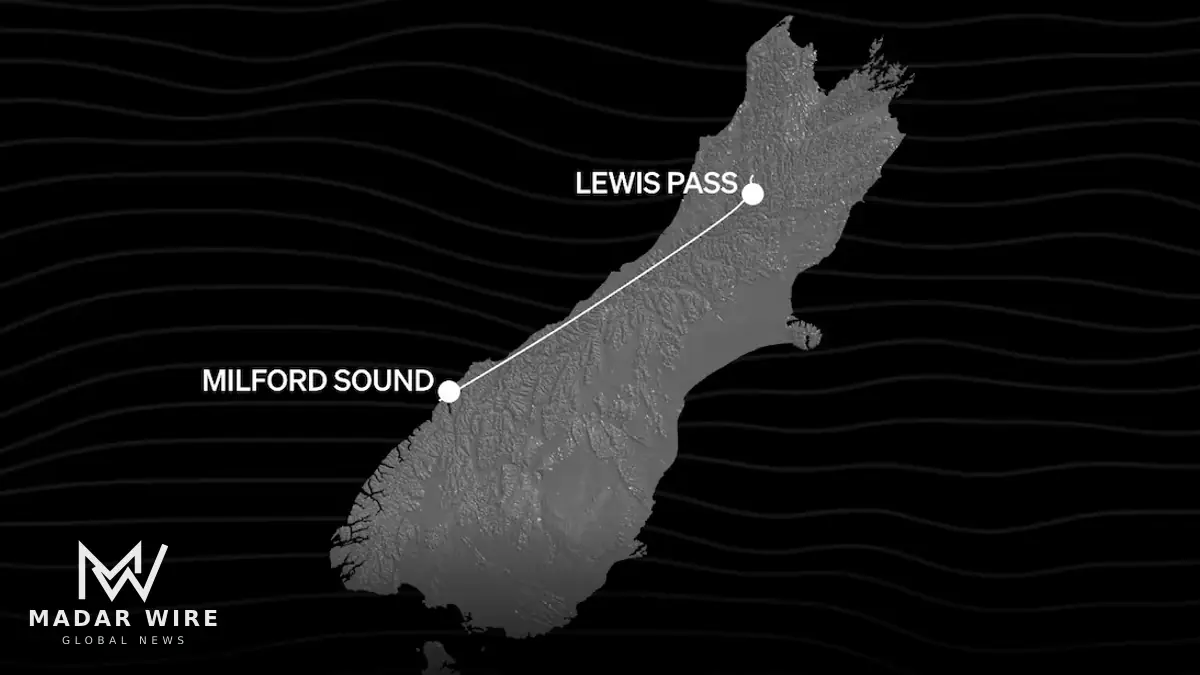
A map showing the Alpine Fault across the South Island with highlighted fibre optic cable route.

Key Highlights

  • Fibre‑optic data map a 200 m‑wide damaged rock band along the Alpine Fault.
  • The fault is a complex zone, not a single, clean fracture as previously thought.
  • Findings could refine earthquake probability models for the South Island.

A joint research team using a newly‑installed fibre‑optic cable has identified that the Alpine Fault consists of a 200‑metre‑wide band of fractured rock, rather than a single, clean fracture line. The discovery, reported by the NZ Herald – National, challenges long‑standing assumptions about the fault’s structure and may affect future seismic hazard modelling.

Study methodology and findings

The project deployed a high‑resolution distributed acoustic sensing (DAS) system along a 150‑kilometre stretch of the fault. By analysing minute strain variations recorded by the cable, scientists were able to visualise subsurface damage zones with unprecedented clarity.

Results show a broad, irregular zone of weakened rock extending roughly 200 metres across the fault trace. This zone contains multiple sub‑faults and shear zones, indicating that the Alpine Fault behaves more like a complex shear zone than a single, planar break.

Implications for seismic risk

Geologists say the new structural picture could alter estimates of how stress accumulates and releases along the fault. A wider damage zone may distribute strain differently, potentially influencing the magnitude and frequency of future earthquakes.

“Understanding the true geometry of the Alpine Fault is crucial for accurate risk assessments,” the NZ Herald – National quoted lead researcher Dr Emma Clarke as saying. The team plans to extend the fibre‑optic network to cover additional sections of the fault to refine their models.

Read Also

  • New Zealand couple supplied cannabis to gang member, face naming
  • Nick Chisholm, quadriplegic bodybuilder, dies aged 53
  • Lower Hutt mourns death of beloved runner Hinano Andrews

While the findings do not suggest an immediate increase in earthquake probability, they underscore the need for updated building codes and emergency preparedness plans in the South Island’s most vulnerable communities.

Related Topics:#New Zealand#Science#Geology

Latest News

Fonterra seeks approval to dump 22 million litres of raw milk

New Zealand couple supplied cannabis to gang member, face naming

Ian Huntley murder claim sparks investigation into UK prison

Mackenzie search underway for missing 72-year-old cyclist

Police seize quarter‑tonne of drugs hidden in onion soup mix

MADAR WIRE

Independent 24/7 news coverage

HomeAbout UsEditorial PolicyPrivacy PolicyTerms of UseContact Us

© 2026 MadarWire. All rights reserved.

PinterestFacebookYouTube