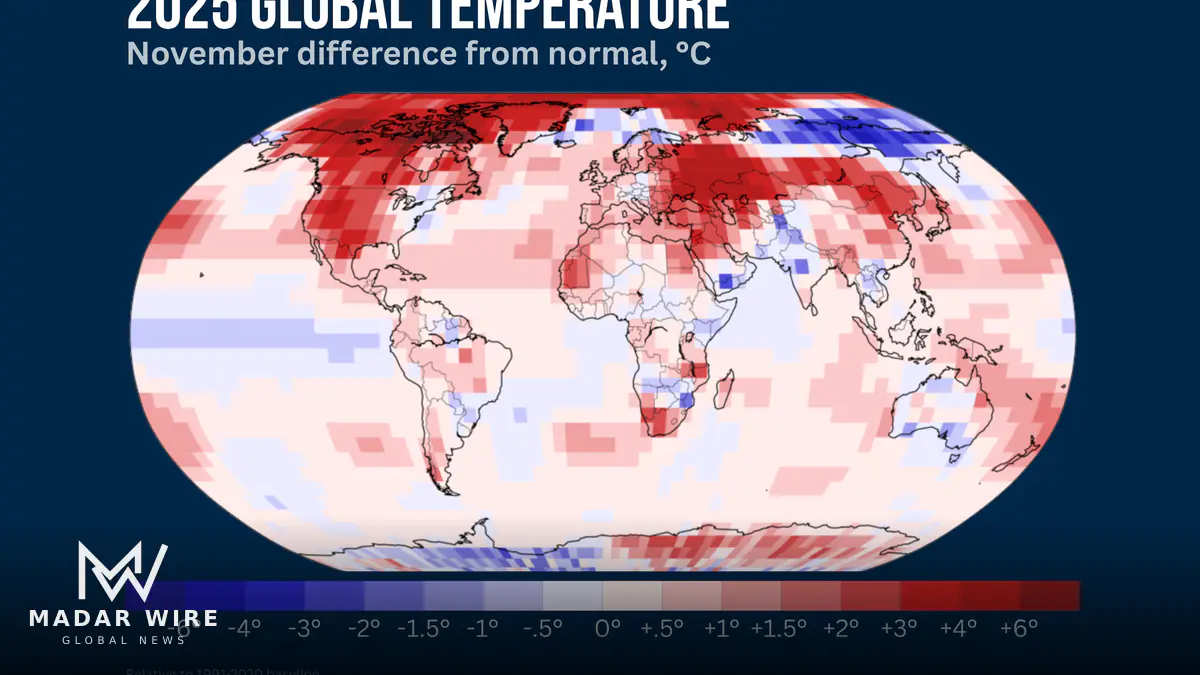
Record November temperatures were recorded across the globe, according to the Financial Times Global. The data shows that many regions experienced heat levels that exceeded the long‑term average by more than 5 °C, a stark reminder of the accelerating climate crisis.
In the United States, the Pacific Northwest recorded a 12 °C spike, while the Middle East saw temperatures climb to 45 °C in parts of Saudi Arabia. Europe’s southern coastlines were not spared, with Spain and Italy reporting daily highs that set new benchmarks for the month.
These unprecedented temperatures are a direct consequence of the continued rise in atmospheric greenhouse gases, the Financial Times Global notes. The heatwave has already caused widespread disruptions, from power grid overloads to increased wild‑fire risk.
International climate negotiations stall
While the world grapples with these extreme weather events, global climate negotiations have reached a deadlock. Nations failed to agree on a binding framework to reduce emissions, leaving the Paris Agreement’s goals in jeopardy.
Key points of contention include the level of financial support for developing countries and the timeline for phasing out fossil fuels. The Financial Times Global reports that the lack of consensus could delay critical policy implementation for years.
Experts warn that without a unified strategy, the risk of crossing tipping points will increase. The heat surge in November is a warning sign that the planet’s climate system is becoming increasingly unstable.
Regional effects and future outlook
In Asia, the heatwave has strained water supplies, particularly in India and Pakistan, where drought conditions have worsened. The Financial Times Global highlights that such conditions could lead to food insecurity and mass migration.
Meanwhile, the Southern Hemisphere experienced a milder but still record‑breaking heatwave, affecting Australia’s agricultural output and exacerbating bushfire threats.
Climate scientists emphasize that the November record is likely to be surpassed if current emission trajectories continue. The Financial Times Global urges governments to adopt aggressive mitigation measures to curb the trend.
In conclusion, the record November temperatures serve as a stark reminder of the urgent need for cohesive global action. Without a binding agreement, the world risks further climate destabilisation and the loss of critical ecosystems.