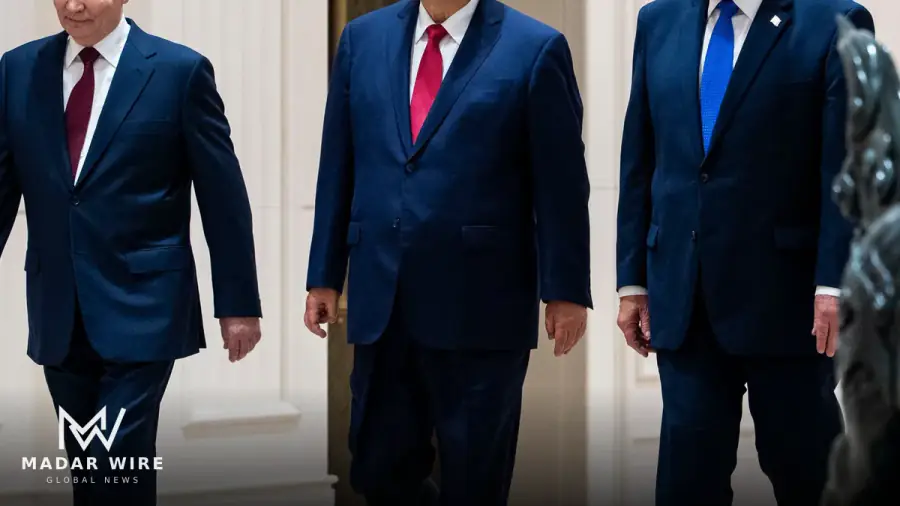
President Joe Biden, President Xi Jinping and President Vladimir Putin met in Geneva this week in a high‑profile summit that many hoped would produce breakthroughs on arms control and emerging technologies. Instead, the three leaders walked away without signing any agreements on war, nuclear weapons or the rapidly evolving AI race.
U.S. officials said the talks were “constructive but inconclusive,” noting that deep mistrust and divergent security priorities limited progress. The New York Times – Politics reported that each side presented its own red lines, leaving little room for compromise.
No Breakthrough on Arms Control
Negotiators from the United States, China and Russia failed to reach consensus on extending the New START treaty, which caps strategic nuclear arsenals. Russia’s demand for a broader definition of “strategic weapons” clashed with U.S. concerns about verification mechanisms, while China, not a party to New START, resisted any framework that might constrain its expanding nuclear forces.
Analysts said the stalemate reflects a broader shift away from the post‑Cold War arms‑control architecture toward bilateral or regional arrangements that exclude the third major nuclear power.
AI and Other Issues Remain Off the Table
Despite growing calls for international norms on artificial‑intelligence development, the topic was absent from the agenda. Sources familiar with the discussions told the NYT – Politics that both Washington and Beijing view AI as a competitive advantage and were unwilling to entertain binding constraints.
Cybersecurity, trade and climate change were also mentioned only in passing, with each side emphasizing national sovereignty over collaborative solutions.
The summit’s lack of tangible outcomes may prompt lawmakers in Washington to reassess diplomatic strategies toward Beijing and Moscow, while the absence of AI dialogue raises concerns about an unregulated global race.