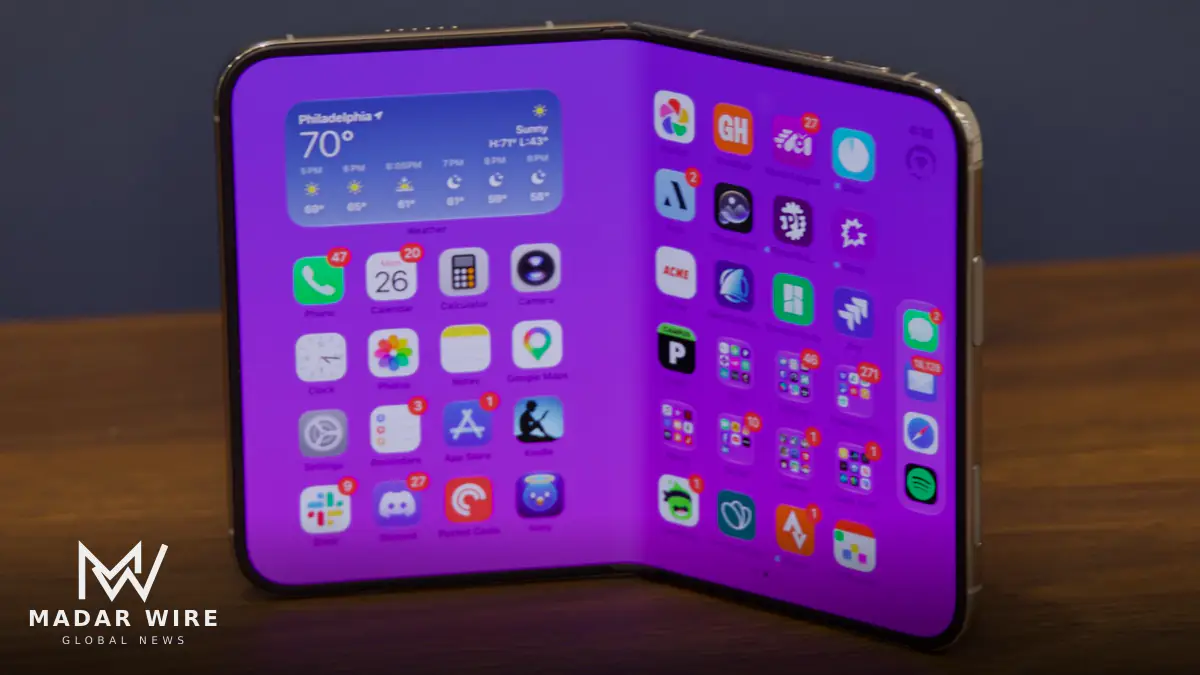
Apple has finally entered the foldable market with the iPhone Duo, a device that collapses a full‑size tablet into a standard‑sized phone. The Guardian’s technology team notes that the phone feels like a premium experiment rather than a mass‑market product. Early adopters will appreciate the novelty, but the price tag and durability concerns may deter most users.
The Duo sits atop Apple’s lineup as the most expensive handset, starting at $1,599. Its hinge mechanism, built from aerospace‑grade aluminum, promises a smooth, audible snap when opening or closing. While the fold feels solid, the thin glass on both sides remains vulnerable to scratches and dents, a risk that Apple has mitigated with a reinforced polymer layer.
Battery life is another focal point. Apple equips the Duo with a 4,500 mAh cell, split between the two halves, delivering roughly a day of mixed usage. The Guardian reports that intensive multitasking on the larger screen drains power faster than on the iPhone 15 series, but the device still outlasts many Android foldables in real‑world tests.
Design and Build Quality
The Duo’s design language stays unmistakably Apple – sleek, minimalist, and instantly recognizable. When unfolded, the 7.8‑inch OLED display offers a 120 Hz refresh rate and a resolution that rivals the iPad Air, making it ideal for media consumption and productivity. Closed, the 6.1‑inch front screen retains the familiar notch and supports all standard iPhone functions.
Apple’s choice to keep a single camera module on the outer shell simplifies the hardware but limits photographic flexibility compared to dual‑camera flagships. The internal camera, hidden when folded, provides a modest 12‑megapixel sensor for video calls and occasional shots, but it cannot match the quality of the iPhone 15 Pro’s system.
iOS Experience and Use Cases
iOS 18 arrives pre‑installed and introduces a “Dual‑Screen” mode that lets users run two apps side by side. The Guardian highlights that while the feature works smoothly, many apps still default to a single‑screen layout, reducing the practical benefit of the larger display.
Apple has also added a new set of gestures for folding and unfolding, allowing users to transition between phone and tablet modes without leaving the home screen. Multitaskers will enjoy dragging a Safari tab onto the secondary screen, but developers will need to update their apps to fully exploit the extra real estate.
Overall, the iPhone Duo is a bold statement that iOS can adapt to a foldable form factor, but the execution feels more like a proof‑of‑concept than a finished product. Its high price, modest camera setup, and limited app optimization keep it firmly in the early‑adopter camp.