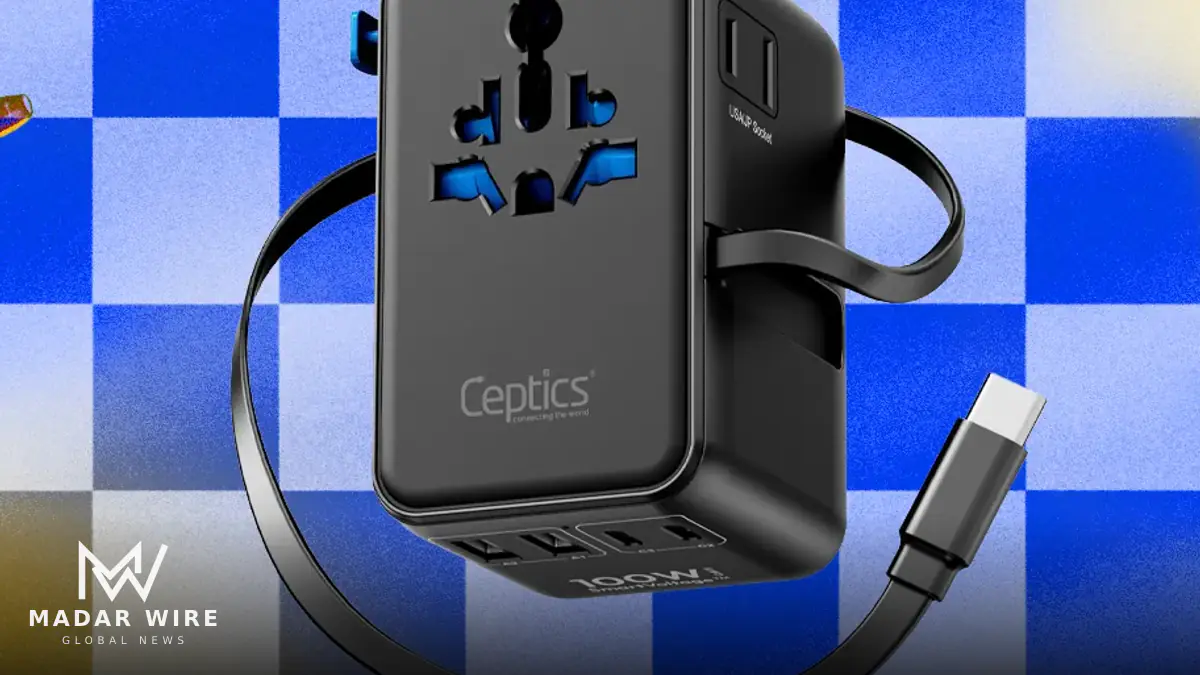
Navigating international power standards remains one of the most persistent friction points for modern travelers. As devices grow more power-hungry and USB-C becomes the universal standard, the humble travel adapter has evolved from a simple plastic block into a sophisticated piece of power delivery hardware. According to recent testing data from Wired, the market is currently saturated with low-quality hardware that fails to meet safety certifications or advertised wattage outputs.
The Shift Toward GaN Technology
The most significant trend in the 2026 travel adapter landscape is the widespread adoption of Gallium Nitride (GaN) technology. By replacing traditional silicon components, manufacturers are now able to pack high-wattage charging capabilities into significantly smaller form factors. Our analysis of the Wired testing results highlights that the top-performing models now offer at least 65W of output, sufficient to charge a modern laptop alongside a smartphone and tablet simultaneously.
When selecting a travel adapter, the physical design is just as critical as the internal circuitry. The best units feature retractable prongs and a modular design that prevents the adapter from falling out of loose wall sockets—a common issue with heavier, multi-port chargers. Wired’s testing emphasizes that users should prioritize models with built-in safety fuses and surge protection, as international power grids can often be inconsistent.
Selecting the Right Hardware
For the frequent flyer, the ideal adapter is one that minimizes the need to carry multiple charging bricks. The top-rated models from the Wired report focus on high-density port configurations, typically offering two USB-C ports and at least one USB-A port. This configuration covers the vast majority of consumer electronics, from high-end mirrorless cameras to noise-canceling headphones.
Beyond raw specs, build quality remains the primary differentiator. Cheap, unbranded adapters often lack the necessary heat dissipation, which can lead to thermal throttling or, in extreme cases, hardware failure. By sticking to established brands that have undergone rigorous stress testing, travelers can ensure their gear remains powered without the risk of damaging sensitive electronics. Whether you are traversing Europe or navigating the diverse socket types of Southeast Asia, investing in a high-quality, multi-region adapter is no longer optional for the tech-reliant professional.